


Props.Cash | Player Props Data
props.cash
I approached Props.Cash as a sports research tool rather than a simple scores app. Its purpose is to help me examine player-prop information across NCAA, NBA, MLB, and other sports, so the useful question is not whether it can replace every betting resource. The better question is whether it makes the process of comparing player markets more organized and less dependent on scattered searches. In my experience, that is where the app has the most value.
It is a free sports app from props.cash, with optional in-app purchases ranging from $19.99 to $199.99 per item. The app is rated for Everyone, runs on Android 7.0 or later, and has reached over 100 thousand installs. Its current version is 3.0.16, while its average rating sits at 4.8 from around 1.5 thousand ratings. Those figures suggest that it has found a clear audience, but they do not remove the need to understand how it fits into a real research routine.
Getting past the first points of friction
The first place I would expect a new user to get stuck is the difference between discovering a prop and deciding what to do with it. Props.Cash is built around player-prop research, not around making a decision for me. That distinction matters. Someone opening it expecting a traditional sportsbook interface, live game commentary, or a simple list of picks may find the experience more analytical than expected.
I found it more useful to begin with one sport and one narrow question. For example, instead of browsing every available market, I might start by checking a basketball player's points line or a baseball player's hit-related market. Limiting the first session makes the information easier to interpret and helps me learn how the app presents its data before I start comparing several players at once.
Another source of confusion is the word “props.” A player prop is a market tied to an individual performance, such as a scoring total or another statistical outcome. The app's role is to help me investigate those markets across supported sports. It is not a guarantee that a particular outcome will happen, and it should not be treated as a substitute for judgment, bankroll discipline, or checking the rules of the service where a wager would actually be placed.
Related News

Why WhatsApp Messenger Still Makes Everyday Communication Feel Easy

Jurassic World: The Game Is the Better Dino Tycoon for Strategic Players

Threads in Real Life: Who Should Join, Lurk, or Leave

How SHEIN Turned Shopping Into an Endless Content Feed

How to Make Fortnite Feel Smarter on Mobile

Should You Switch to Microsoft Outlook on Mobile?
The free starting point is helpful because I can test whether the app suits my habits before committing to optional purchases. At the same time, the purchase range means that some users may encounter a clear boundary between basic access and more advanced use. I would not pay immediately. I would first decide whether the available information changes how I research props, rather than merely giving me another screen to refresh.
The app is also not the best fit for every sports fan. If I mainly want final scores, team news, schedules, or a quick live update, a conventional sports-score app is likely faster. Props.Cash makes more sense for someone who enjoys comparing individual player markets and wants a dedicated place to study them. That narrower purpose is a strength for the right audience and a limitation for everyone else.
What I check before blaming the app
When a sports research app appears empty, slow, or incomplete, I first check the simple conditions around it. I confirm that the app is updated, that my device meets the Android requirement, and that the connection is stable. Props information can be time-sensitive, so a weak connection or a moment when markets are changing may look like an app problem even when the underlying issue is temporary.
Gallery
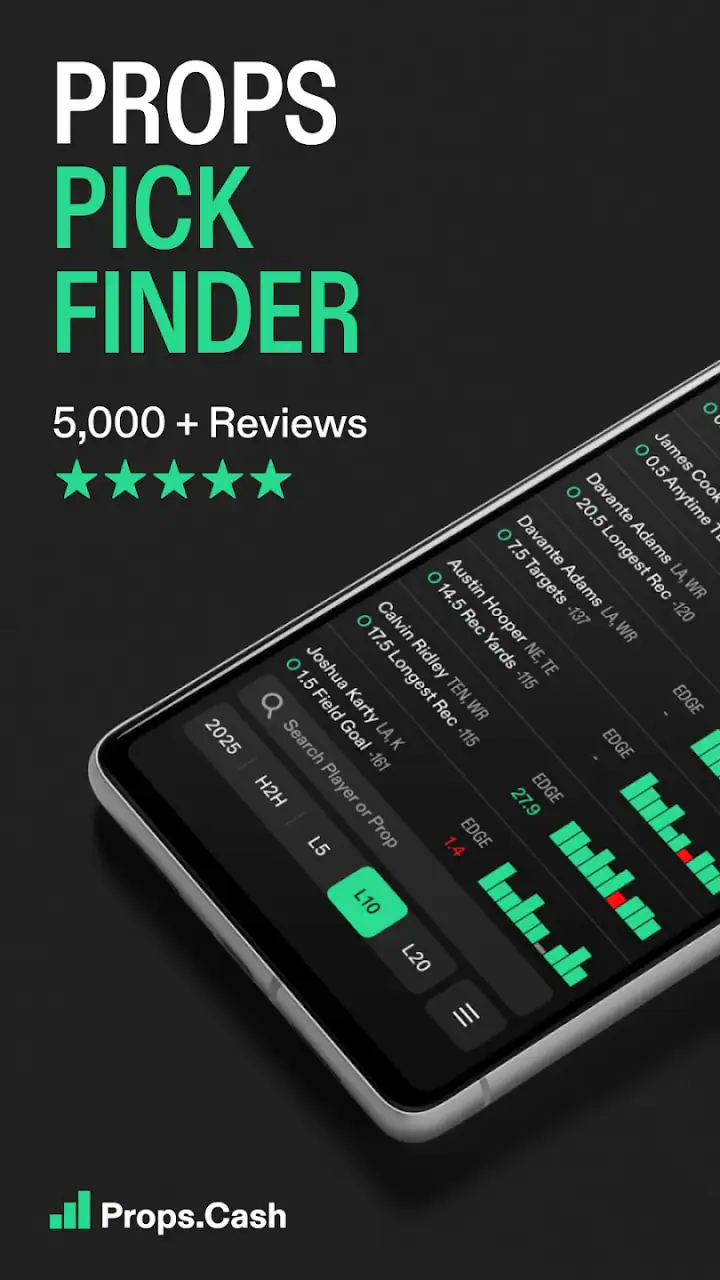
I also check whether I have selected the sport and market I actually intended to inspect. Moving between NCAA, NBA, MLB, and other competitions can create a misleading impression if filters remain active from an earlier search. A narrow filter that was useful for one player may hide the results I expect when I switch sports. Clearing or reviewing those choices is a practical first step before reinstalling anything.
My preferred setup is deliberately small. I choose the sport, identify the player or market, and then record what I am comparing. I avoid opening several unrelated searches at once because that makes it harder to tell whether a result changed, whether I changed the filter, or whether the market itself moved outside the app.
It is also worth checking the device's date and time settings if information looks strangely out of sequence. Sports markets depend on event timing, and an incorrect device clock can make an otherwise normal schedule appear confusing. This is a general troubleshooting check, not a special feature of Props.Cash, but it can save unnecessary resets.
Android 7.0 compatibility makes the app accessible to a broad range of devices, although an older phone may still feel less comfortable when several screens or data-heavy views are involved. If scrolling feels sluggish, I would close other demanding apps, restart the device, and try again before assuming that the account or market data is damaged.
A repeatable workflow for recovering a messy search
My recovery routine starts by stepping back rather than repeatedly tapping the same control. I return to a single sport, remove unnecessary filters, and search for one player or market again. This creates a clean baseline. If the result appears, I add filters one at a time so I can identify which choice caused the confusion.
This approach is especially useful when moving between college and professional sports. The same search habit does not always translate perfectly between competitions because the available player information and market types can differ. I treat each sport as its own research context instead of assuming that a filter or comparison method will behave identically everywhere.
When I find a market worth revisiting, I write down the key details and the time I checked them. That small habit is more valuable than relying on memory. Player props can change as news develops, and a later difference does not automatically mean the earlier result was wrong. It may simply reflect a changed market, updated availability, or a new piece of team information.
I also separate research from action. First I examine the player and market. Then I verify the latest information elsewhere if necessary. Only after that do I decide whether the opportunity still makes sense. This prevents the common mistake of treating a convenient app screen as the entire decision-making process.
If the app remains unresponsive after a clean restart and a simpler search, I would use ordinary Android recovery steps: force-close it, reopen it, check for an available update, and restart the phone. Clearing app storage should be a later step because it can remove local session information. I would only do that if I am comfortable signing in again and know the account details needed to recover access.
Reinstalling is another last resort, not my first response. It can help when local files have become inconsistent, but it does not solve a service-side delay or a market that has temporarily changed. If the same issue appears on a fresh session while other apps work normally, I would document the sport, market, and approximate time before contacting support through the channel available with the app.
When the problem is outside Props.Cash
Sports data is connected to events that change quickly, so not every mismatch points to a software failure. A player may be questionable, a lineup may change, or a market may close and reopen under different conditions. In those situations, the app can be displaying a changing environment rather than malfunctioning.
I pay particular attention to the difference between a data question and an account question. If the app opens but one market looks different from another source, I compare the sport, event, player, market type, and timing. Two screens can appear to disagree while actually referring to different lines or different update moments.
Network conditions are another overlooked factor. A connection can be strong enough to load a page but unstable enough to interrupt updates. Switching between a reliable Wi-Fi connection and mobile data, then reopening the relevant screen, is a sensible general test. I avoid making a decision while the display appears partially loaded.
There is also a human factor. Prop research can become noisy when I follow too many players, sports, and markets simultaneously. If the app feels overwhelming, the answer may be to narrow the workflow rather than add more tools. I get better results by choosing a short list, checking the latest context, and noting why a market interests me.
Props.Cash should not be treated as an authority that removes uncertainty. Its value is in organizing research around player props. Injuries, coaching decisions, playing time, weather, opponent strategy, and simple variance can all affect the outcome. A clean interface cannot make those variables predictable, and no historical pattern should be read as a promise.
How it compares with ordinary sports apps
Compared with a general sports app, Props.Cash has a more focused job. A scores app is usually better for following a game from start to finish, checking standings, or receiving broad team updates. A news app may be better for reading interviews and injury reports. A sportsbook may be better for placing a wager. Props.Cash sits in the research layer between those activities, concentrating attention on individual-player markets.
That separation can improve my process. Instead of switching through a sportsbook's betting screen and trying to remember why a player interests me, I can use a dedicated prop-focused environment first. I still need another source for context and the relevant wagering service for any transaction, but the app gives the research step its own space.
The trade-off is that a focused tool can feel incomplete if I expect it to cover every part of sports fandom. I would not install it as my only sports app. It is most useful alongside a reliable source of team news and, for users who wager, a properly licensed service that explains its own terms and availability.
The optional purchase structure also changes the comparison. A casual fan may prefer free general sports tools because they already provide enough information for occasional curiosity. A serious prop researcher may find value in paid access if the additional material genuinely saves time or improves organization. I would judge that by repeated use, not by the size of the feature list or the enthusiasm of other users.
Who will benefit from the app
I would recommend Props.Cash to someone who regularly studies player props across more than one sport and wants a dedicated research workflow. It is particularly suitable for a user who likes comparing markets, checking a player's situation, and keeping a disciplined separation between evidence and impulse.
A realistic use case would be an evening NBA slate. I might open the app after work, select the relevant sport, review a small group of players, and note which markets deserve further checking. I would then look at current team news, confirm the player's expected role, and revisit the prop before making any decision. The app helps structure that sequence; it does not replace the final checks.
It can also suit someone who follows NCAA basketball or MLB and dislikes forcing every sport into the same general scores interface. The ability to investigate player-focused markets across different competitions is the central reason to try it. The more often I perform that task, the more likely the dedicated format will feel worthwhile.
I would advise skipping it if I only want quick scores, if I dislike analyzing statistical markets, or if I am looking for guaranteed picks. I would also be cautious if optional purchases would encourage me to spend more than my intended budget. Free access provides a sensible trial, and there is no reason to upgrade until the app has earned a regular place in my routine.
My practical verdict after using it
Props.Cash is strongest as a focused player-prop research companion, not as an all-purpose sports destination. I like the way its purpose encourages a more deliberate workflow: choose a sport, narrow the market, investigate the player, and verify the surrounding context. That is more useful to me than jumping straight from a headline to a wager.
The main friction comes from the same focus that makes it valuable. New users need to understand that the app organizes information rather than guarantees outcomes. Filters, changing markets, connection quality, and event timing can all affect what appears on screen. A calm reset-and-check routine is more effective than repeatedly refreshing or assuming that every mismatch is a technical fault.
The free entry point makes trying it straightforward, while the optional purchases deserve a measured approach. I would use the app long enough to see whether it genuinely reduces research time before spending money. Users should also remember that any wagering decision involves risk and that the app cannot account for every late lineup change or real-world variable.
Overall, I see Props.Cash as a good match for sports fans who want to study individual-player markets across NCAA, NBA, MLB, and more. It is less compelling for someone who simply needs scores or news. If I were recommending it to a friend, I would say: start with one sport, keep the first search simple, verify changing information outside the app, and treat its research as one part of a careful process. Used that way, it offers a practical and specialized experience rather than trying to be something it is not.
FAQs for Props.Cash | Player Props Data
What is Props.Cash | Player Props Data used for?
Props.Cash is a research and analytics platform designed to help users study player prop markets before making decisions on eligible sports contests or sportsbooks. It brings together player statistics, trends, matchup information, projections, and historical performance in one place. The app is primarily intended for analysis and does not guarantee that any selection or prediction will be successful.
Which sports and player props are available in Props.Cash?
Coverage can vary depending on the current version of the app, your location, and the leagues or sportsbooks supported at the time you use it. Props.Cash generally focuses on popular player-prop markets, such as points, rebounds, assists, shots, or other sport-specific statistics. Before downloading, check the app’s current listing and in-app coverage to confirm that your preferred sport, league, and market are included.
Does Props.Cash provide guaranteed winning picks or betting advice?
No. Props.Cash should be treated as a data and research tool rather than a source of guaranteed winners. Its projections, trends, and historical comparisons can help you identify relevant information, but sports outcomes remain uncertain and data may not reflect late injuries, lineup changes, coaching decisions, or unexpected game conditions. Always verify information independently and make decisions responsibly.
Is Props.Cash free to use, or does it require a subscription?
The app may offer some features without payment while reserving advanced tools, deeper data, projections, or expanded market access for a premium plan. Pricing, trial availability, and subscription terms can change, so review the current App Store or Google Play listing and the purchase screen carefully. Pay attention to renewal dates, billing frequency, and cancellation instructions before starting a trial or subscription.
Is Props.Cash available everywhere, and are there legal or age restrictions?
Availability and functionality may depend on your country, state, or region. Some features may be limited because sports wagering and fantasy contests are regulated differently across jurisdictions. Props.Cash may also be intended only for adults, particularly when used alongside betting or paid contests. Confirm local laws, platform eligibility requirements, and the app’s terms of service before using its information for any contest or wager.
Pros
- Fast access to player prop trends and historical performance data.
- Useful filters help narrow down props by sport
- league
- and player.
- Supports research across multiple major sports and betting markets.
- Clean interface makes statistical information easy to scan.
- Can complement sportsbooks by providing independent data for analysis.
Cons
- Data usefulness depends on the accuracy and update speed of the provider.
- Some advanced insights or features may require a paid subscription.
- The amount of statistics can feel overwhelming for new users.
- Coverage may vary between sports
- leagues
- and less popular competitions.
- It provides analysis
- not guaranteed outcomes or responsible betting guidance.


